


Counterfeit Money Store
Add a review FollowOverview
-
Founded Date May 30, 1964
-
Sectors Accounting / Finance
-
Posted Jobs 0
-
Viewed 38

Company Description
Guide To Order Counterfeit Money: The Intermediate Guide Towards Order Counterfeit Money
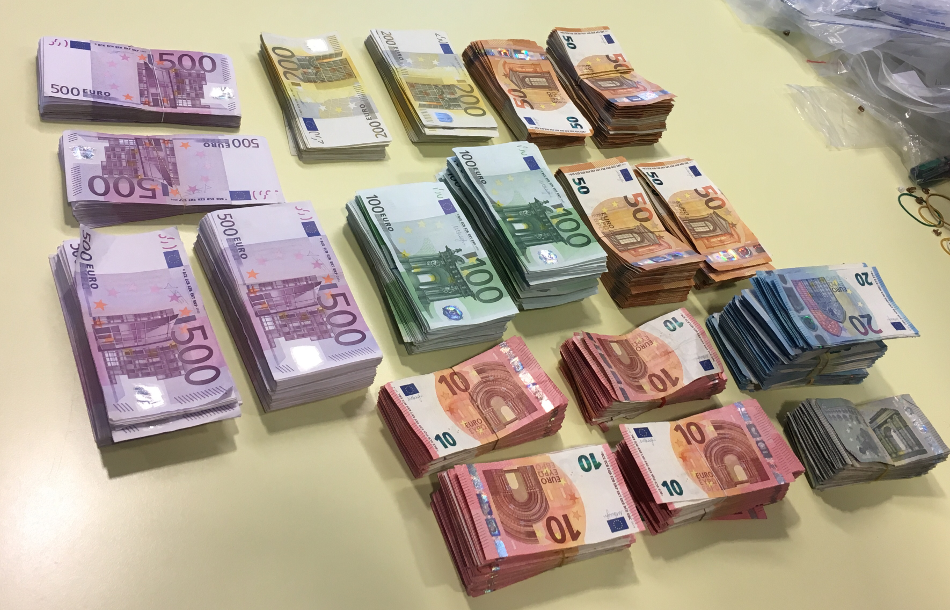
Understanding the Dark World of Counterfeit Money
Counterfeit money has actually been a societal concern for centuries, with prohibited operations looking for to duplicate currency for profit and causing a huge selection of financial repercussions. As sophisticated technology has emerged, so too have the approaches used to produce fake bills. This article aims to delve into the world of counterfeit money, exploring its ramifications, how it is produced, and how individuals and services can recognize and fight this issue.
What is Counterfeit Money?
Counterfeit money is any currency that is made to imitate authentic currency however is produced without legal authority. These fake bills are created to look and feel like authentic currency to trick the public and services. Counterfeiting is a crime that impacts not just the economy but likewise rely on monetary systems.
Table 1: The Basics of Counterfeit Money
| Aspect | Description |
|---|---|
| Meaning | Replica of legal tender without permission |
| Origin | Can stem from arranged criminal activity or private efforts |
| Effects | Financial losses, increased rates, decreased trust |
| Legal Status | Thought about a federal crime in a lot of nations |
The Creation of Counterfeit Bills
Approaches of Counterfeiting
Counterfeiters utilize different techniques to produce fake money. Below are some typical techniques:
Printing Techniques:
- Old-school printers using a standard inkjet or laser are still in use, though significantly unsophisticated.
- Digital printing has become more sophisticated, allowing counterfeiters to produce high-quality replicas.
Paper Quality:
- Counterfeiters attempt to replicate the paper used in actual currency, though it often fails quality tests.
Security Features:
- Successful counterfeits may simulate some functions like watermarks or color-shifting inks, but usually lack the complete spectrum of security components present in real notes.
Table 2: Counterfeiting Techniques
| Method | Description |
|---|---|
| Digital Printing | Uses sophisticated printers for high-quality phonies |
| Chemical Alteration | Controls genuine notes to change their value |
| Traditional Printing | Uses old methods, less frequently successful |
| Paper Mimicking | Attempts to reproduce currency paper; often stops working |
Impacts on the Economy
The implications of Order Counterfeit Money currency can be comprehensive, impacting people, organizations, and the bigger economic structure.
Economic Implications
Inflation:
- Increased counterfeit money in circulation can cause inflation as the real value of currency decreases.
Trust Erosion:
- If counterfeit bills become widespread, individuals might lose self-confidence in the monetary system.
Increased Costs for Businesses:
- Businesses may incur losses as they spot counterfeit money, which can also cause higher rates for customers.
Table 3: Economic Effects of Counterfeiting
| Effect | Description |
|---|---|
| Inflation | Increased product prices due to devalued currency |
| Lost Revenue | Businesses lose money when accepting phonies |
| Task Losses | Industries might diminish as financial conditions worsen |
Preventing Counterfeiting
Understanding and recognizing counterfeit currency can help individuals and organizations prevent falling victim to it. Here are some essential suggestions and practices:
Tips for Recognizing Counterfeit Money
Feel the Texture: Genuine notes have a distinct texture. Counterfeit bills may feel too smooth or too stiff.
Examine the Security Features: Studies reveal that those who acknowledge security functions are less likely to accept counterfeit money.
Use a Blacklight: Many currencies have embedded security functions that are just visible under UV light.
Try to find Watermarks: Genuine currency normally has a visible watermark that is hard to duplicate.
Table 4: Detecting Counterfeit Money
| Detection Method | Details |
|---|---|
| Texture Examination | Feel for authentic currency texture |
| Security Features Check | Search for holograms, threads, and microprinting |
| UV Light Test | Use UV light to find surprise features |
| Watermark Visibility | Inspect for a noticeable watermark versus the light |
Frequently Asked Questions About Counterfeit Money
Q1: Is it unlawful to possess counterfeit money?
A1: Yes, possessing counterfeit money is illegal and can lead to serious charges, including fines and imprisonment.
Q2: How can I report counterfeit money?
A2: If you encounter counterfeit currency, you need to report it to your local law enforcement firm or the U.S. Secret Service.
Q3: What should I do if I receive a counterfeit costs?
A3: If you get a counterfeit costs, avoid passing it on. Turn it over to law enforcement, together with information of the transaction.
Q4: Does counterfeit money impact everybody?
A4: Yes, counterfeit money effects everybody indirectly through inflation and lost confidence in the currency by making transactions riskier.
In Conclusion
Counterfeit money represents not only a criminal act but an ongoing obstacle to individuals and economies worldwide. Comprehending its implications, recognizing the signs of counterfeit bills, and taking proactive measures can empower people to protect themselves and add to a healthier economy. As technology advances, so too should our approaches to eliminate counterfeit dangers, highlighting the significance of caution and education in fighting this concern.
With this information, stakeholders from consumers to organizations can understand the complexities of counterfeit money and contribute to decreasing its impact in the economy.